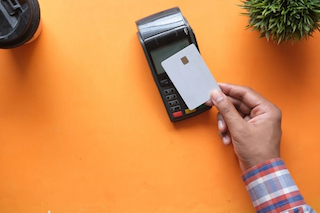
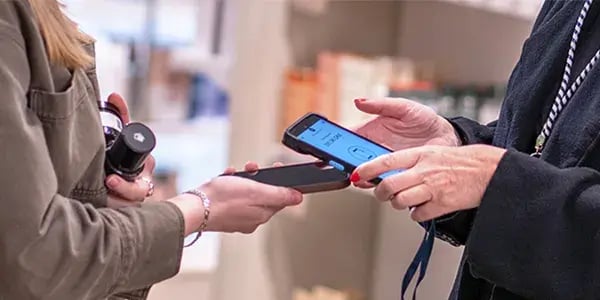
EVERYTHING THAT MATTERS AT CHECKOUT HAPPENS HERE.

Retail POS system


Prices are applied. Payments go through. Returns are handled. And the final transaction is recorded before it flows into the rest of your retail setup in a unified commerce environment.

52ViKING POS is built to get that moment right. Every time.
 

Homepage_hero_1200x650-1

Trusted by retailers of all sizes

On this page


What is 52ViKING POS?

52ViKING POS is the single point of truth for transactional data at checkout. It means POS takes clear, unambiguous ownership of what happens at the till. Nothing else.

It does not manage your master data, run your ERP, or own your loyalty program. What it does is price the transaction correctly, execute it, handle the return when the customer comes back, and close the day. Then it hands the record to the systems downstream. Cleanly, reliably, every time.

When responsibility for the transaction is shared across systems, errors become harder to trace and reconciliation becomes harder to trust.

In omnichannel retail, a customer journey might start in an app, continue in a store, and finish at a self-checkout. This is unified commerce in practice. The POS is the moment where it all has to add up. 52ViKING POS makes sure it does. The same calculation logic, the same behavior, regardless of which checkout format is being used or where the journey started.

In short:

  • Single point of truth for checkout transactions: Price, execution and accounting
  • Identical calculation logic across stationary POS, mobile POS and self-checkout
  • Broad API base for integration into existing retail ecosystems - no forced vendors
  • Designed to behave predictably under real store conditions, including the bad ones

What is a Retail POS System?

A retail POS system (point of sale system) is the system that completes checkout. It applies prices, processes payments, and records the transaction when a purchase is made. When it fails, sales stop immediately.

In simpler retail setups, that description covers it. In complex environments such as high-volume grocery chains, large-format DIY stores, and multi-country retail with omnichannel ambitions, the responsibility is bigger. POS determines whether a transaction is completed correctly, in every store, across every checkout format. It connects to ERP, loyalty platforms, payment providers, and order management systems. And it has to keep working when any of those surrounding systems have a bad day.

When POS fails, sales stop. There is no grace period.
shopping cart empty 1920x1080

USE CASES

One POS – multiple checkout scenarios

One POS system runs every checkout format. The same transaction logic applies whether the sale happens at a staffed till, a self-checkout lane, a mobile device on the shop floor, or a temporary setup outside the store. The interaction changes. The core does not.

Each scenario has its own operational requirements. What they share is the same transactional core.

The POS UI Designer lets retailers adapt the checkout interface to each scenario, whether that is a fresh food counter, a fashion floor, or a fast lane, without touching the transactional logic underneath.

Fiftytwo-52POSConnector_ERP_POS_cashier_1200x200

Stationary POS

The staffed checkout. Fast, reliable, the same POS logic that runs everywhere else in the estate.

SoftPOS_hero_1200x300

Mobile POS

Bring the till to the customer. Queue-busting, assisted selling, pop-ups, outdoor events. Same prices. Same promotions. Same everything.
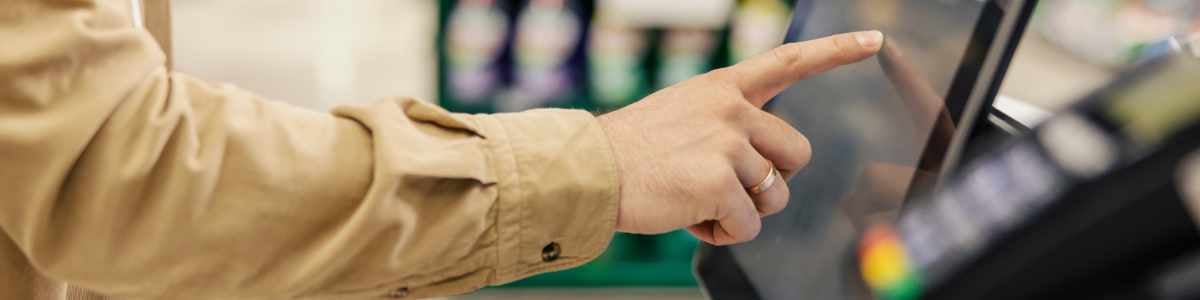
 

fiftytwo_sco_hero_1200x300

Self-checkout

Self-checkout systems (both unattended and semi-attended) that run the full POS logic. Not a simplified version. The real thing.


Fiftytwo-emergency-POS-server-cyber-atack-solution-1200x400_2

Emergency POS

When the network drops, when systems go down, when something unexpected happens: stores keep transacting. Sales do not stop because the infrastructure has a problem.


POS RESPONSIBILITIES

What the POS is responsible for

In complex retail environments, POS is not just a user interface. It is a system of responsibility.

At checkout, POS is the system that says yes or no to a transaction. That decision affects revenue, reconciliation, regulatory compliance, and the customer standing in front of the till. 52ViKING POS is built around that accountability:

budicon-arrow-left-right

Transaction integrity

Every transaction completes or is rejected in a controlled, traceable way.

budicon-price-tag

Price, promotion, and loyalty execution

What gets calculated at checkout is what counts.

budicon-refund

Returns and refunds

Handled consistently across channels and timeframes.


budicon-checkboxes

Compliance

Fiscal rules, receipts, taxes, and country-specific requirements are enforced at checkout.

connection_arrows_icon_200x200_grøn

Operational continuity

Transactions keep completing even when surrounding systems or connectivity fail.


budicon-deal

Data handover

Transactional data goes reliably to ERP, payments, inventory, OMS, and reporting systems.

TESTIMONIALS

What our clients say

"Fiftytwo was the obvious choice for us. Their POS system is modern, flexible, and above all, reliable - which is crucial when we have thousands of customers through our stores every day."

  • Ole Petter Harv
    Europris

 “We chose Fiftytwo because from day one at our very first meeting with them, we sensed their competence and industry knowledge. They have many customers like us, so we were confident that we would get a good, solid system.”  

  • Klaus Bølle
    OK Plus

“The customer should have a complete and totally frictionless shopping experience with all the features known from the stationary cash register. We achieve that with the mobile POS – increasing both sales and customer satisfaction.”


  • David Heeroma
    Matas Group
POS ARCHITECTURE

Built for stores that can't afford a bad day

A POS architecture must complete transactions correctly even when surrounding systems fail. Connectivity drops. Integrations break. Stores still need to keep selling.

Retail does not run under ideal conditions. A POS system that depends on them will fail at the worst possible moment.

52ViKING POS is built around store reality, not infrastructure assumptions.

Retail technology environments are not static. ERP platforms, loyalty programs, and payment providers change as the business evolves. They should be able to. Each connects to 52ViKING via APIs and can be replaced or updated without touching how transactions are calculated and executed at checkout.

The transaction core stays constant. POS, pricing, and promotions are bundled and tested together as one release. Whether a transaction happens at a staffed lane, a self-checkout terminal, a mobile POS, or in an emergency setup, the same logic applies. What a customer pays is calculated the same way every time.

Together, this means retailers can modernize their technology stack without putting checkout at risk.

52ViKING is built on containerized, headless services with an API-first architecture. Each service runs the same way whether it is deployed in the cloud or on edge hardware in the store. That means a store can keep running, transactions, pricing, and promotions included, even if the network goes down or central systems are unavailable. Nothing stops because something else has a problem.

Modular where it matters. Unified where it counts.

HYBRID DEPLOYMENT

Retail does not stop when connectivity drops

52ViKING POS supports cloud, edge, and hybrid deployment. Most complex retailers run a hybrid setup: transaction execution happens locally at checkout, while configuration and integrations are handled centrally. Stores keep transacting even when the surrounding systems or connectivity have a problem.

COMMERCE_photo_2022_119

Fiftytwo POS in numbers

STORES

+5.000

TILLS

+20.000

DAILY TRANSACTIONS

+5 millions

The retailers running 52ViKING operate some of the most demanding checkout environments in Northern Europe. 

INTEGRATIONS

It fits into your ecosystem. It does not replace it.

Some POS vendors want to be your entire retail platform. 52ViKING POS does not. It integrates with the systems that manage your master data, fulfillment, payments, and customers, through APIs, without dictating vendors or architecture.

This supports a best-of-breed approach. Every part of your retail stack should be the right tool for that specific job. POS is responsible for the transactional moment at checkout and for integrating cleanly with everything around it.

Person holding a lot of shopping bags

ERP systems

Tapping terminal

Payment providers

Person in warehouse with computer

Inventory and stock management

Payment in salon

Order management systems (OMS)

kundeloyalitet_columnsslider

 Loyalty and customer platforms 

The retailers using 52ViKING POS, including Salling Group, Dagrofa, and Europris, run some of the most complex integration environments in Nordic retail. The integrations are proven in production, not just on paper.


QUESTIONS?
 

Let us show you

SMART RETAIL

The retail concepts that only work if checkout works

Every unified commerce initiative depends on one thing: the transaction must complete correctly at checkout. Endless aisles, cross-channel returns, shared loyalty programs. None of it works if the POS cannot execute at the till.

Unified commerce is built on a shared operational foundation: shared pricing logic, shared customer data, and shared transaction records. Every touchpoint draws from and feeds into the same platform. POS is where that foundation is executed in the store.

The retail concepts below all depend on it:

Contactless checkout_600x300

Enable seamless payments with Tap on screen and SoftPOS on any device 
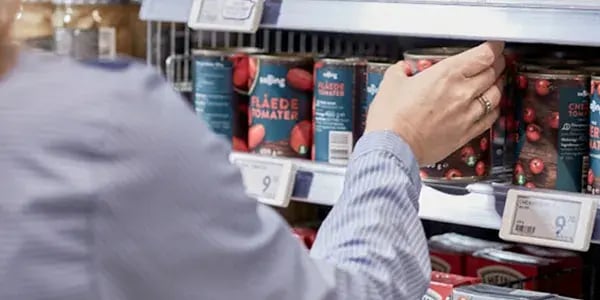
connected-stores_600x300
Real-time visibility and coordination across locations.
Endless aisles_MPOS_matas_600x300
Order from the full range at any till or device.
Digital receipts_600x300
Issued at the transactional moment in POS.

How to choose a retail POS system for complex environments

Feature lists rarely show how POS systems or point of sale solutions behave. Every vendor's list looks broadly similar at the top level. What separates them is what happens when things go wrong.

Most POS failures are not caused by missing features. They happen when systems cannot handle edge cases, inconsistent data, or partial outages.

In omnichannel retail, POS must handle transactions that span channels without compromising calculation integrity. That single requirement eliminates a lot of vendors before the conversation even gets to features.

Ask what happens when connectivity fails mid-transaction. Ask who controls when software updates are pushed to stores and whether a bad release can be rolled back before it reaches the whole estate. Ask whether the POS can act as the unambiguous system of record for checkout transactions, or whether that responsibility gets shared across systems in a way that makes reconciliation harder.

API maturity, documentation quality, and real-world experience integrating with your ERP and payment stack will tell you more than a compatibility list.

Key questions to ask any POS vendor:

What happens to in-progress transactions when connectivity is lost?

A POS that relies on central connectivity will stop or degrade. One with edge execution will continue processing locally and sync when the connection returns.

Who controls release timing, and how are rollouts managed across a large store estate?

Vendor-controlled updates mean you have no say in when changes land. Retailer-controlled rollouts mean you can test, stage, and reverse before something reaches 400 stores.

Can this POS be the definitive system of record for checkout data?

If responsibility is shared across systems, reconciliation becomes harder and discrepancies are harder to trace.

How does POS behavior stay consistent across different checkout formats?

Inconsistent calculation logic across formats creates pricing discrepancies and customer trust issues.

What is the real integration path to our ERP and payment provider?

A compatibility list is not the same as proven, production-tested integration. Ask for references from retailers running your specific stack.

What does the support model look like when a store has a critical incident?

A Saturday afternoon outage in a grocery store is not a business hours problem. Know exactly what the response looks like before you need it.

shopping cart empty 1920x1080

THE GOOD CHOICE

Why 52ViKING POS?

Retailers who choose 52ViKING POS tend to share a few common traits. Their checkout environments are complex. Downtime has a direct, measurable cost. And they need a POS that integrates cleanly with their existing stack rather than replacing it.

What they get is a system built around a clear idea. POS should do its specific job extremely well and stay out of the way everywhere else. Stable transactional core. Strong APIs. The POS UI Designer for adapting the checkout experience without changing the underlying platform. And a deployment approach that gives stores resilience without requiring IT to manage an entirely different infrastructure model for each location.

52ViKING POS is built for the long term. Retailers do not replace POS often. When they do, they are betting on a platform that will still be right for them in ten years. That is why controlled, deliberate evolution matters more to us than constantly shipping new features.

INDUSTRIES

Built for complex retail formats

52ViKING POS runs across grocery chains, large-format DIY stores, convenience, beauty, and specialty retail. The common thread is not the industry. It is operational complexity: high transaction volumes, demanding campaign logic, multiple checkout formats, and stores where downtime is not an option.

Grocery_900x525

Grocery

High volume, constant throughput, complex promotions, multiple checkout formats running simultaneously. 

Convenience_900x525_coffe

Convenience

Fast transactions, high uptime, flexible store formats, loyalty-driven journeys and multiple checkout options including self-service 
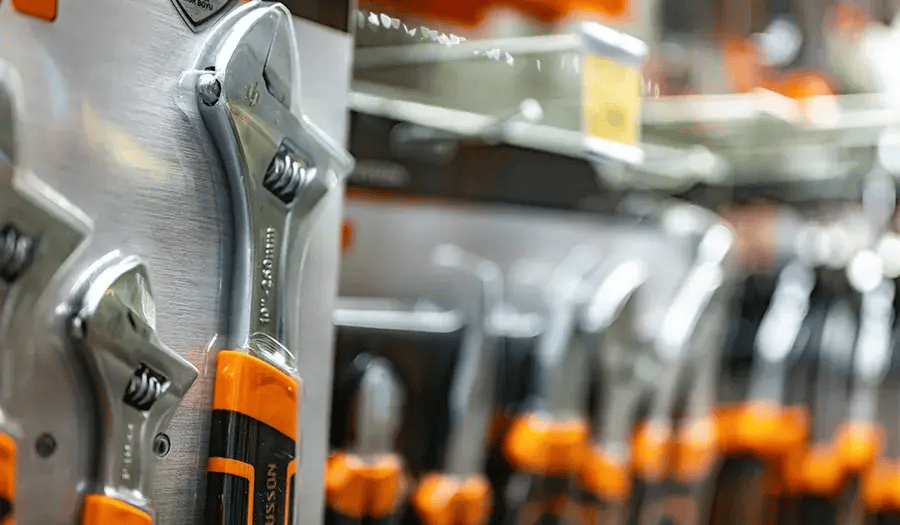
DIY_900x525

DIY

Large-format stores, mixed customer journeys, seasonal pressure, staff-assisted and self-service side by side
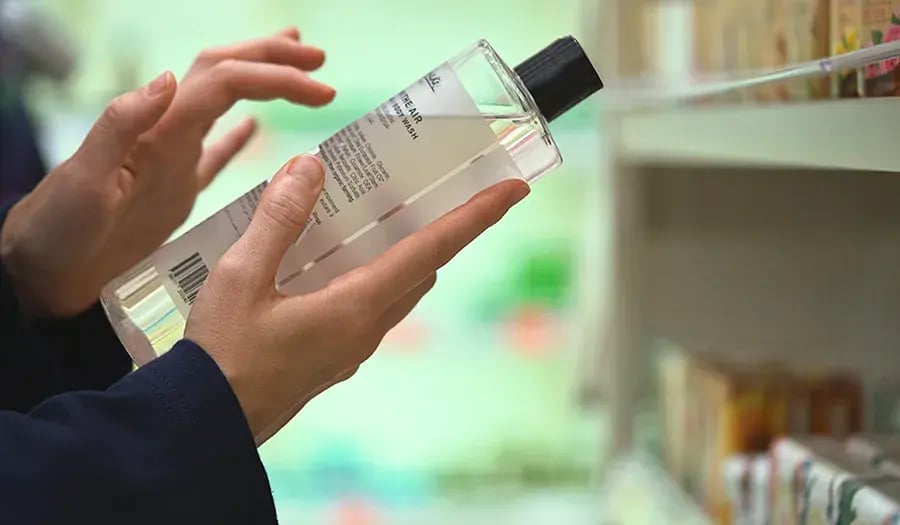
Beauty_900x525

Beauty

Complex pricing and promotions, loyalty at the core, dialog-based selling, and frequent campaigns, gifts, and returns 

Non-food_900x525

Non-food

Wide assortment, complex transactions, high return rates, seasonal variation, and need for flexible, customizable store setups 

Frequently asked questions

These questions address common points of confusion around POS responsibility, system boundaries, and deployment models.

The answers are based on how 52ViKING POS operates in real retail environments.

Is 52ViKING POS an ERP?

No. ERP systems manage financial processes and enterprise data. 52ViKING POS executes and records transactions at checkout and passes that data to ERP and other systems. Confusing the two leads to misaligned expectations about what POS should own.

Does POS replace my payment provider?

No. 52ViKING POS integrates with your payment provider. It manages transaction logic and records the outcome. Switching payment provider does not require changing your POS.

What does 'single point of truth at checkout' actually mean?

POS owns the final transactional record: the calculated price, the completed or rejected transaction, and end-of-day accounting. Master data and customer records live elsewhere and feed into POS. This defined scope is what makes POS reliable and auditable.

Can the POS operate when connectivity fails?

Yes. With edge execution, transactions are processed locally in the store and synchronized with central systems once connectivity returns. For many complex retailers, this is the primary reason they choose an edge-first or hybrid deployment model.

How does 52ViKING POS integrate with existing systems?

Through APIs. 52ViKING POS connects to ERP, loyalty platforms, inventory, order management, and payment providers without requiring specific vendors or imposing architectural decisions. This means retailers keep full control over their technology stack.

What types of retailers is 52ViKING POS best suited for?

Retailers with complex store environments where checkout reliability and transaction accuracy are non-negotiable. Grocery chains, large-format DIY, convenience, and specialty retail running high transaction volumes across multiple formats and locations. Not suited for simple single-format retail where a lightweight cloud POS is sufficient.

Søren Brammer Riis
QUESTIONS?
 

Let me help you!

My name is Søren Brammer Riis and I am the CCO of Fiftytwo.
Reach out to me and I will make sure to answer your questions
or guide you in the right direction.